Consumption
Consumption, or tuberculosis, is the wasting disease that condemns Hippolyte Terentieff to an early death and drives the most sustained philosophical meditation on mortality in Dostoevsky's novel. More than a clinical diagnosis, it becomes the crucible in which Hippolyte forges his "last conviction" — a bitter, defiant rejection of the world that will outlive him. The disease's inexorable progress structures his final weeks, shapes his notorious "Necessary Explanation," and transforms him into a living symbol of the novel's central question: how should a man live when he knows he must soon die?
Diagnosis and the Certainty of Death
Hippolyte learns his fate from a medical student, Kislorodoff, whom he deliberately chose because he "needed a man who would tell me the bare truth without any humbug or ceremony." Kislorodoff, a Nationalist, Atheist, and Nihilist by conviction, delivers the verdict "almost with pleasure": Hippolyte has about a month left, though it might be considerably less, and sudden death is always possible. Kislorodoff cites the case of a young consumptive woman at Colomna who, though "about on a par with myself in the march of the disease," went out to market, felt faint, lay down on a sofa, gasped once, and died. This clinical, almost casual pronouncement strips Hippolyte of all illusion. He accepts the estimate as "absolutely persuaded" fact, and from this certainty his entire subsequent behavior unfolds.
The Experience of the Dying
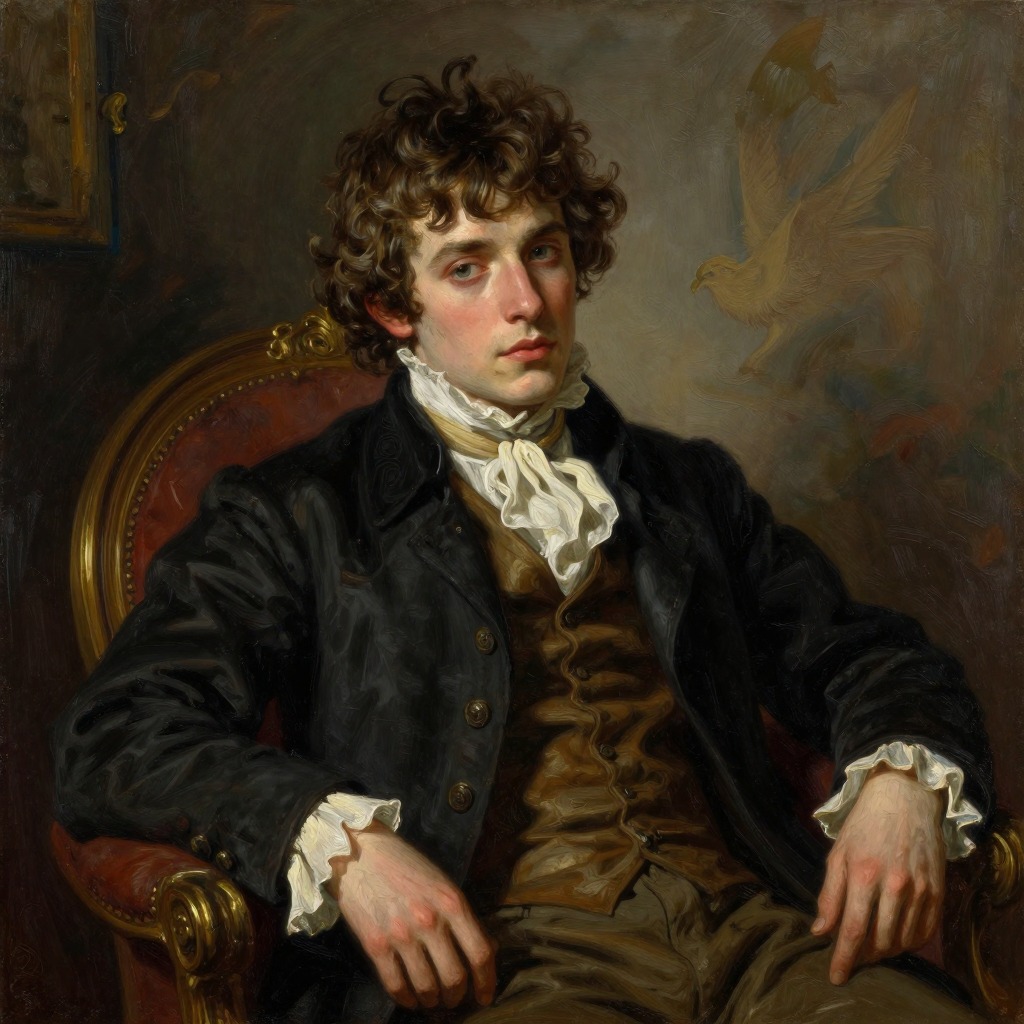
The physical reality of consumption is rendered in vivid, harrowing detail. Hippolyte is described as having a "skeleton-like figure, a ghastly complexion," with "brightness of his eyes, and the red spots of colour on his cheeks" that "betrayed the victim of consumption to the most casual glance." He coughs persistently, pants for breath, and his handkerchief becomes stained with blood. His voice is a "croaking" one, and he is "nearly dead with fatigue." Yet the disease also produces paradoxical moments of deceptive well-being; after moving to Pavlofsk, he declares he has "not felt so well for the last six months, and has coughed much less." This fluctuation — the false spring of remission — only deepens the tragedy, as it gives him brief hope before the inevitable decline.
The "Last Conviction" and Philosophical Revolt
Hippolyte's consumption is the direct cause of his "last conviction" — the idea that it is not worth living for a few weeks. This thought took partial possession of him a month before his confession, but fully overmastered him three days before he reads his "Necessary Explanation." The disease forces him to confront the absurdity of a life that has been rendered meaningless by its own imminent end. He asks, "What is the good of reading, what is the good of learning anything, for just six months?" and throws books under the table. He rails against the "blind, deaf fate" that has decided to crush him "like a fly." His protest is not a quiet acceptance but a furious, articulate rebellion. He declares that he will die "gazing straight at the great Fountain of life and power" and that he does not want this life. The disease, by granting him a precise deadline, paradoxically gives him the only freedom he has ever known: the freedom to choose his own death. He resolves to shoot himself at sunrise in the park, and his "Explanation" is both a farewell and a manifesto.
Narrative and Thematic Significance
Hippolyte's consumption serves as a foil to Prince Muishkin's epilepsy. Where the prince's condition grants him moments of ecstatic clarity and a sense of harmony, Hippolyte's disease offers only a slow, agonizing disintegration and a bitter, rational clarity. The consumptive boy becomes the novel's most insistent voice of nihilism and despair, challenging the prince's Christian compassion and the society's shallow optimism. His failed suicide attempt — the pistol misfires because he forgot to put on a cap — is a grotesque anticlimax that underscores the absurdity of his position. He is not even allowed the dignity of a successful rebellion. The disease ultimately kills him, as expected, "about a fortnight after Nastasia Philipovna's death," but his real legacy is the philosophical challenge he posed: a challenge to find meaning in a life that science has already measured and condemned.